The Loop of Racism
- Koko
- Jun 14, 2020
- 9 min read


Racism. Noun; Prejudice, discrimination, or antagonism directed against a person or people on the basis of their membership of a particular racial or ethnic group, typically one that is a minority or marginalized.
It is a sad truth that root of racism had existed since the slavery days. Slavery was not an invention of middle ages. It had existed for more than a thousand years. However, it was more profound as a trade at the end of fourteenth century when the Europeans began to take African people against their will for their slave trade. The slave trade, initially created on account of the developing interest for sugar, which endured in Britain for around 150 years. Irish shippers were a piece of this exchange. By the mid-eighteenth century, Britain was one of the most extravagant slave exchanging countries the world, with enormous quantities of slaves being shipped from African and Asian colonies to Europe and America.


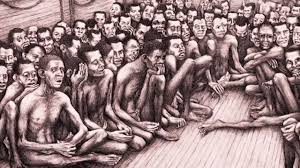
Triangular Trade- A trading system which was implemented to trade sugar and other goods. Ships left Bristol, Liverpool, and London conveying materials, black powder, silk, and different products. These were then exchanged in Africa for slaves. The slaves were taken to the Caribbean and America to chip away at estates, where they were traded for sugar, cotton, flavors, and rum. These goods were then reclaimed to Britain and sold. Over 30 million people were from West Africa and sold into slavery. The way they were transported was very ruthless, pitiless, so inhumane that nobody wanted to be treated that way. They were often beaten for asking a bit of comfort on their journey or even asking a glass of water. The journey for them wasn't as pleasant as how we would travel today. With one of every five failing to survive the journey. Those that survived could just hope to live another 2 to 4 years, so terrible were the working conditions in the ranches. Numerous slaves attempted to get away or rebel, and even suicides were a daily occurrence.
Due to this disgusting and horrifying act of the slave trade, many people wanted to stop. This drove the individuals who bolstered it to create hypotheses to legitimize what they were doing. They asserted that a few slaves had come down with a quickly spreading illness, the indications of which made the slaves run away! Blacks were normally sluggish, individuals were told, which is the reason they loathed dealing with the plantations. Protectors of the slave exchange likewise said that blacks were less canny than whites; they were "sub-human" and had tails.
Fifty years back, most blacks were without a doubt caught in neediness, in spite of the fact that they didn't dwell in downtown. When Gunnar Myrdal distributed An American Dilemma in 1944, most blacks lived in the South and on the land as workers and tenant farmers. (Just one of every eight claimed the land on which he worked.) A minor 5 percent of dark men broadly were occupied with nonmanual, white-collar work of any sort; most by far held not well paid, unreliable, manual occupations—employments that couple of whites would take. As effectively noted, six out of ten African-American ladies were household servants who, driven by financial edginess, regularly worked 12-hour days for woefully low wages. Isolation in the South and separation in the North created a protected market for some dark organizations (burial service homes, excellence parlors, and such) that served a dark network banished from belittling "white" foundations. Be that as it may, the number was tiny.
Starting during the 1940's, be that as it may, profound segment and monetary change, joined by a stamped move in white racial perspectives, began blacks not far off to a lot more prominent balance. New Deal enactment, which set least wages and hours and wiped out the motivating force of southern bosses to recruit low-wage dark laborers, put down further modern improvement in the district. Likewise, the pattern toward automated horticulture and a reduced interest for American cotton even with universal rivalry joined to dislodge blacks from the land.
As an outcome, with the lack of laborers in northern assembling plants following the flare-up of World War II, southern blacks looking for occupations boarded prepares and transports in a Great Migration that kept going through the mid-1960s. They found what they were searching for: compensation so strikingly high that in 1953 the normal salary for a dark family in the North was twice that of the individuals who stayed in the South. Furthermore, through a significant part of the 1950s wages rose consistently and joblessness was low.
Thus by 1960 only one out of seven black men still labored on the land, and almost a quarter were in white-collar or skilled manual occupations. Another 24 percent had semiskilled factory jobs that meant membership in the stable working class, while the proportion of black women working as servants had been cut in half. Even those who did not move up into higher-ranking jobs were doing much better.
A decade later, the gains were even more striking. From 1940 to 1970, black men cut the income gap by about a third, and by 1970 they were earning (on average) roughly 60 percent of what white men took in. The advancement of black women was even more impressive. Black life expectancy went up dramatically, as did black home ownership rates. Black college enrollment also rose—by 1970 to about 10 percent of the total, three times the prewar figure.
In resulting years these patterns proceeded, in spite of the fact that at an all the more restful pace. For example, today in excess of 30 percent of dark men and almost 60 percent of dark ladies hold desk employments. Though in 1970 just 2.2 percent of American doctors were dark, the figure is presently 4.5 percent. Be that as it may, while the portion of dark families with white-collar class wages rose just about 40 rate focuses somewhere in the range of 1940 and 1970, it has crept up just another 10 focuses from that point forward.
Governmental policy regarding minorities in society Doesn't Work
The fast change in the status of blacks for a very long while followed by an unmistakable log jam that starts exactly when governmental policy regarding minorities in society arrangements get their beginning: that story unquestionably implies that racial inclinations have appreciated expanded notoriety. "There's one basic motivation to help governmental policy regarding minorities in society," a commentary essayist in the New York Times contended in 1995. "It works." That is the voice of a customary way of thinking.
Truth be told, not exclusively did critical advances pre-date the governmental policy regarding minorities in society time, however, the advantages of race-cognizant legislative issues are not satisfactory. Significant contrasts (a more slow generally speaking pace of monetary development, most outstandingly) separate the pre-1970 and post-1970 periods, making correlation troublesome.
We know just this: a few additions are presumably insufferable from race-cognizant instructive and work strategies. The quantity of dark school and college teachers dramatically increased somewhere in the range of 1970 and 1990; the number of doctors significantly increased; the number of architects nearly quadrupled, and the number of lawyers expanded more than sixfold. Those numbers without a doubt do mirror the way that the country's expert schools changed their confirmations rules for dark candidates, tolerating and frequently giving a monetary guide to African-American understudies whose scholarly records were a lot more vulnerable than those of many white and Asian-American candidates whom these schools were turning down. Inclinations "worked" for these recipients, in that they were given seats in the study hall that they would not have won without racial twofold measures.
Then again, these experts make up a little division of the absolute dark working class. What's more, their numbers would have developed without inclinations, the authentic record firmly proposes. Moreover, the best financial additions for African Americans since the mid-1960s were in the years 1965 to 1975 and happened basically in the South, as market analysts John J. Donahue III and James Heckman have found. Indeed, Donahue and Heckman found "essentially no improvement" in the wages of dark men comparative with those of white men outside of the South over the whole time frame from 1963 to 1987, and southern increases, they finished up, were primarily because of the incredible anti discrimination arrangements in the 1964 Civil Rights Act.
Concerning government, state, and metropolitan set-asides, also, the jury is still out. In 1994 the province of Maryland concluded that at any rate, 10 percent of the agreements it granted would go to minority-and female-claimed firms. It more than met its objective. The program accordingly "worked" if the objective was just the limited one of administering money to a specific, assigned gathering. Be that as it may, how well do these shielded organizations endure long haul without remarkable security from free-showcase rivalry? What's more, with just about 30 percent of dark families despite everything living in destitution, what is their stream down impact? On neither one of the scores is the image consoling. Projects are frequently deceitful, with white contractual workers offering minority firms 15 percent of the benefit with no commitment to do any of the work. On the other hand, set-asides enhance those with the correct associations. In Richmond, Virginia, for example, the primary impact of the statute was a marriage of political accommodation—a working partnership between the financially favored of the two races. The white business world-class marked on to a bit of-the-pie for blacks so as to clean its picture as socially cognizant and secure help for the midtown renewal it needed. Dark government officials utilized the deal to propose their own significance to low-pay constituents for whom the set-asides really did pretty much nothing. Neither minded whether the strategy in certainty gave genuine monetary advantages—which it didn't.
Why Has the Engine of Progress Stalled?
In the decades since governmental policy regarding minorities in society strategies were first initiated, the destitution rate has remained fundamentally unaltered. In spite of dark gains by various different measures, near 30 percent of dark families despite everything life underneath the neediness line. "There are the individuals who state, my kindred Americans, that even great governmental policy regarding minorities in social programs are not, at this point required," President Clinton said in July 1995. In any case, "let us consider," he went on, that "the joblessness rate for African Americans stays about twice that of whites." Racial inclinations are the president's response to diligent disparity, albeit 25 years of governmental policy regarding minorities in society has done nothing whatever to close the joblessness hole.
The tireless disparity is clearly genuine, and in the event, that separation was the essential issue, at that point race-cognizant cures may be suitable. In any case, while white prejudice was integral to the story in 1964, today the image is considerably more confounded. In this manner, while blacks and whites presently graduate at a similar rate from secondary school today and are similarly liable to go to school, on normal they are not similarly taught. That is, taking a gander at long stretches of tutoring in evaluating the racial hole in family pay reveals to us minimal about the psychological abilities whites and blacks bring to the activity showcase. Also, subjective abilities clearly influence income.
The National Assessment of Educational Progress (NAEP) is the country's report card on what American understudies going to rudimentary and auxiliary schools know. By and large, are alarmingly a long ways behind whites in math, science, perusing, and composing. For example, dark understudies toward the finish of their secondary school profession are right around four years behind white understudies in perusing; the hole is practically identical in different subjects. An investigation of 26-to 33-year-elderly people men who held all day employments in 1991 accordingly found that when training was estimated by long stretches of school finished, blacks earned 19 percent not exactly equivalently taught whites. In any case, when word information, section perception, arithmetical thinking, and scientific information turned into the measuring stick, the outcomes were switched. Dark men earned 9 percent more than white men with similar instruction—that is, a similar presentation on essential tests.
The Road to True Equality
Black progress over the past half-century has been impressive, conventional wisdom to the contrary notwithstanding. And yet the nation has many miles to go on the road to true racial equality. “I wish I could say that racism and prejudice were only distant memories, but as I look around I see that even educated whites and African American…have lost hope in equality,” Thurgood Marshall said in 1992. A year earlier The Economist magazine had reported the problem of race as one of “shattered dreams.” In fact, all hope has not been “lost,” and “shattered” was much too strong a word, but certainly in the 1960s the civil rights community failed to anticipate just how tough the voyage would be. (Thurgood Marshall had envisioned an end to all school segregation within five years of the Supreme Court s decision in Brown v. Board of Education.) Many blacks, particularly, are now discouraged. A 1997 Gallup poll found a sharp decline in optimism since 1980; only 33 percent of blacks (versus 58 percent of whites) thought both the quality of life for blacks and race relations had gotten better.
Thus, progress—by many measures seemingly so clear—is viewed as an illusion, the sort of fantasy to which intellectuals are particularly prone. But the historical sense of nothing gained is in itself bad news. Pessimism is a self-fulfilling prophecy. If all our efforts as a nation to resolve the “American dilemma” have been in vain—if we’ve been spinning our wheels in the rut of ubiquitous and permanent racism, as Derrick Bell, Andrew Hacker, and others argue—then racial equality is a hopeless task, an unattainable ideal. If both blacks and whites understand and celebrate the gains of the past, however, we will move forward with the optimism, insight, and energy that further progress surely demands.

Comments